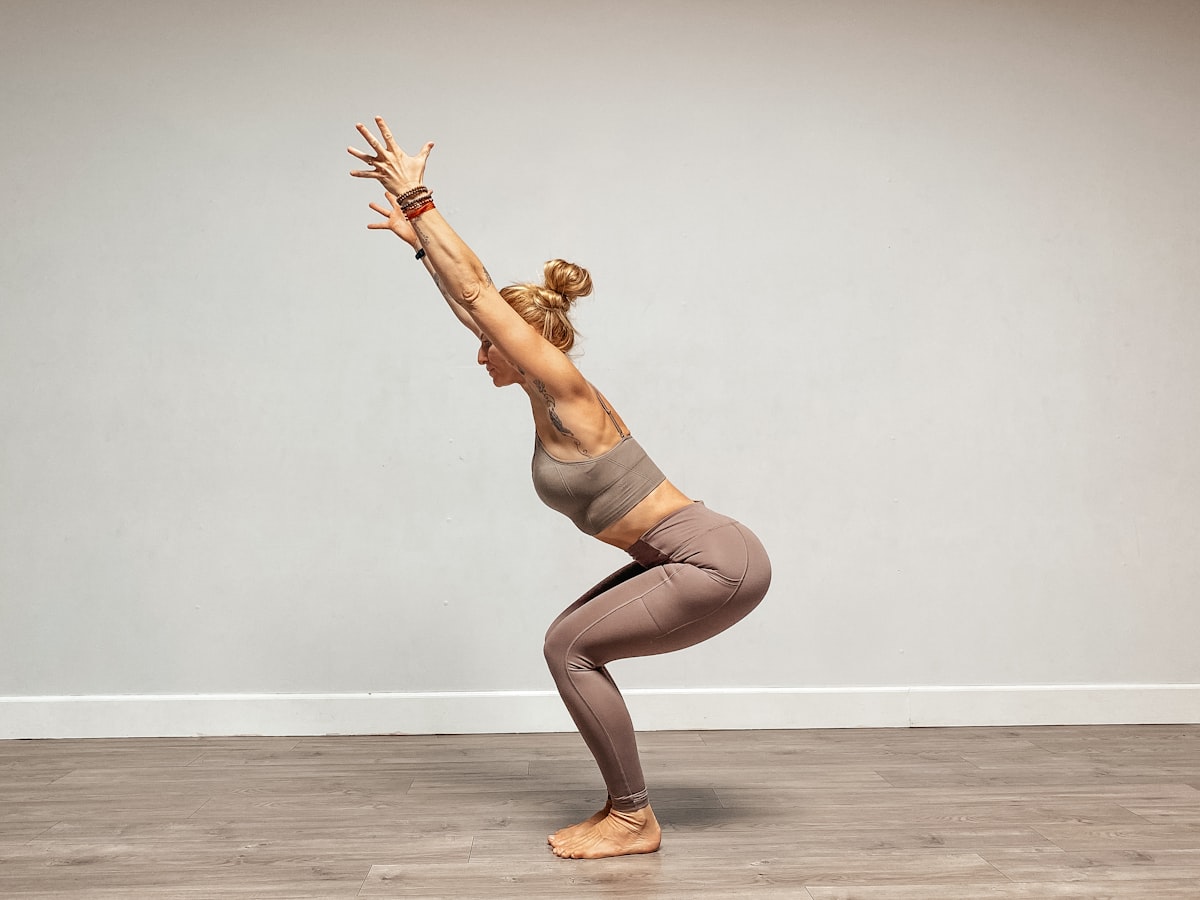
Warrior II appears in nearly every standing sequence, yet the alignment details that make it genuinely effective — rather than simply a wide stance with bent arms — are frequently glossed over in fast-paced classes.
The Foundational Setup
From a wide stance, the front foot points forward while the back foot turns roughly parallel to the back of the mat (not fully forward), with the front knee bending to track directly over the front ankle — not collapsing inward, a common and potentially knee-stressing error. The back leg remains straight and active, pressing firmly into the outer edge of the back foot.
The Hip and Torso Position
Unlike forward-facing poses, Warrior II asks the hips and torso to remain facing the side of the mat, perpendicular to the direction of the front leg — a genuinely common point of confusion, as many practitioners unconsciously rotate the torso toward the front leg, losing the pose's characteristic open-hip orientation.
Arm Position and Common Errors
Arms extend parallel to the floor, reaching actively through the fingertips in both directions rather than simply hanging at shoulder height. A frequent mistake is allowing the front arm to drift forward (toward the front leg) rather than maintaining a true side-to-side line, which subtly undermines the pose's stabilizing, grounding quality.
Why the Front Knee Tracking Matters So Much
Allowing the front knee to collapse inward, past the alignment of the ankle, places meaningful stress on the knee joint's supporting ligaments, particularly under sustained holding. Actively pressing the knee outward, in line with the middle toe, protects the joint while also engaging the outer hip muscles more effectively — a small adjustment with significant safety implications over repeated practice.
Building Genuine Strength Through This Pose
Held for several breaths rather than rushed through, Warrior II builds substantial strength in the legs, particularly the quadriceps of the front leg and the stabilizing muscles of the back leg and outer hips — while the wide, grounded stance cultivates a felt sense of stability that extends beyond the pose itself.
Connecting to Pranayama and Focus
Many teachers pair Warrior II with steady Ujjayi breath and a fixed gaze point (drishti) over the front hand — the combination of physical stability, steady breath, and focused attention is part of what distinguishes a mindfully held Warrior II from simply a strength-building stretch.
Practicing With Correction
Given how frequently this pose is practiced with subtle misalignment, individual correction genuinely accelerates learning correct form. This level of alignment detail is taught throughout the asana curriculum in our 200-hour program.