For students not yet ready to commit to a full teacher training but wanting to build a meaningful home practice, here is a focused selection of foundational poses that offer genuine value without requiring an elaborate routine or advanced ability.
Tadasana (Mountain Pose)
Often dismissed as "just standing," Tadasana is genuinely foundational — establishing the alignment principles (even weight distribution, lengthened spine, engaged but not rigid posture) that inform nearly every other standing pose. Practicing this consciously, rather than rushing past it, meaningfully improves overall alignment awareness.
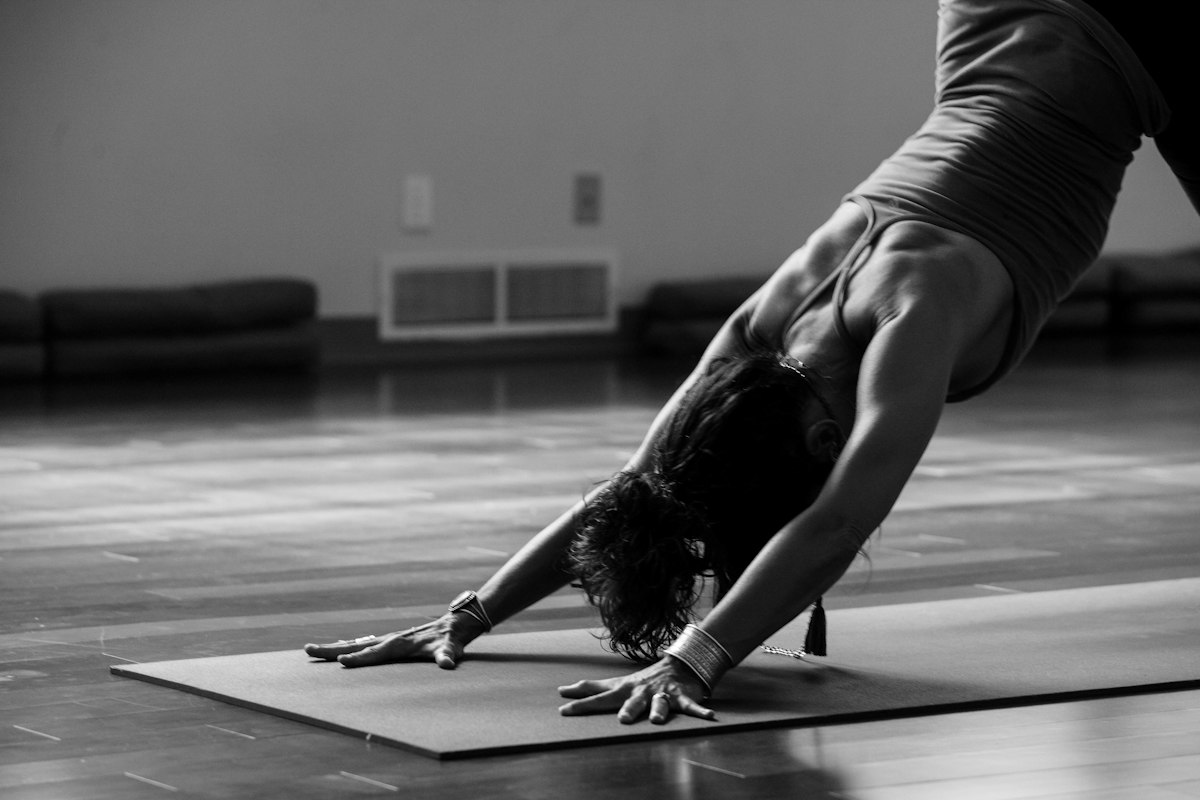
Adho Mukha Svanasana (Downward-Facing Dog)
A genuinely complete pose offering hamstring and calf lengthening, shoulder and upper body strengthening, and a mild inversion effect. This pose alone, held and breathed through mindfully, offers substantial benefit even as a standalone practice.
Virabhadrasana I and II (Warrior I and II)
These standing poses build genuine strength in the legs while teaching hip alignment and stability — foundational for the broader category of standing postures and a good entry point into more dynamic sequences.
Balasana (Child's Pose)
An accessible resting pose that can be returned to at any point during a home practice when more demanding poses feel like too much — genuinely useful to know as a default rest position rather than simply stopping practice entirely when fatigued.
Bhujangasana (Cobra Pose)
A gentle backbend introducing spinal extension safely, building the foundational strength and mobility that more advanced backbends eventually require.
Paschimottanasana (Seated Forward Fold)
Teaches the crucial distinction between hip-hinge folding (correct) and lower-back rounding (the common mistake), directly relevant to the spinal mechanics covered in our anatomy guide.
Savasana (Corpse Pose)
Frequently rushed or skipped entirely by beginners eager to "do more," Savasana is genuinely essential — the integration period where the nervous system processes the preceding practice. Skipping it regularly undermines much of the practice's benefit.
Building These Into a Simple Sequence
A genuinely useful beginner home sequence might combine several rounds of Surya Namaskar (which itself includes several of these poses), followed by a few standing poses, a seated forward fold, and always ending with Savasana — even just 15-20 minutes practiced consistently offers real benefit.
When Self-Practice Reaches Its Limits
A home practice built from articles and videos genuinely has value, but it cannot fully replace the individual correction, deeper instruction, and structured progression that in-person training offers. Many students who build a solid home practice eventually seek out a structured immersion specifically once they want to deepen beyond what self-directed practice alone can offer.