Understanding basic spinal anatomy transforms how you approach asana practice — moving from simply mimicking a shape to understanding why certain alignment cues exist and what they protect.
The Four Natural Curves
The healthy spine is not straight — it has four natural curves: cervical (neck, curving slightly forward), thoracic (upper back, curving slightly backward), lumbar (lower back, curving forward again), and sacral (curving backward at the base). Yoga practice generally aims to maintain or restore these natural curves rather than flattening or exaggerating them, which is why "lengthen your spine" is a more accurate cue than "flatten your back" in most postures.
Flexion, Extension, and Why Both Matter
Forward folds (flexion) and backbends (extension) move the spine in opposite directions, and a balanced practice includes both rather than favoring one. Practicing extensive backbending without complementary forward folding (or vice versa) can create imbalances in the surrounding muscles and connective tissue over time — one reason traditional sequences like Surya Namaskar deliberately alternate between flexion and extension within a single round.
Why "Neutral Spine" Matters in Standing Poses
In standing postures like Tadasana (Mountain Pose) or transitions like Plank, maintaining a neutral spine — neither excessively arched nor flattened — distributes load evenly across the vertebrae and surrounding musculature. Common alignment cues like "draw the navel in" or "lengthen the tailbone down" are practical instructions for achieving this neutral position, not arbitrary aesthetic preferences.
The Role of the Core in Spinal Protection
The deep core muscles — particularly the transverse abdominis and the muscles supporting the pelvic floor — act as a kind of internal corset that stabilizes the spine during movement. This is why many teacher trainings emphasize core engagement cues even in poses that do not look like obvious "core work," such as backbends or arm balances — the spine needs that stabilization to move safely through a full range of motion.
Common Spinal Injuries in Yoga Practice
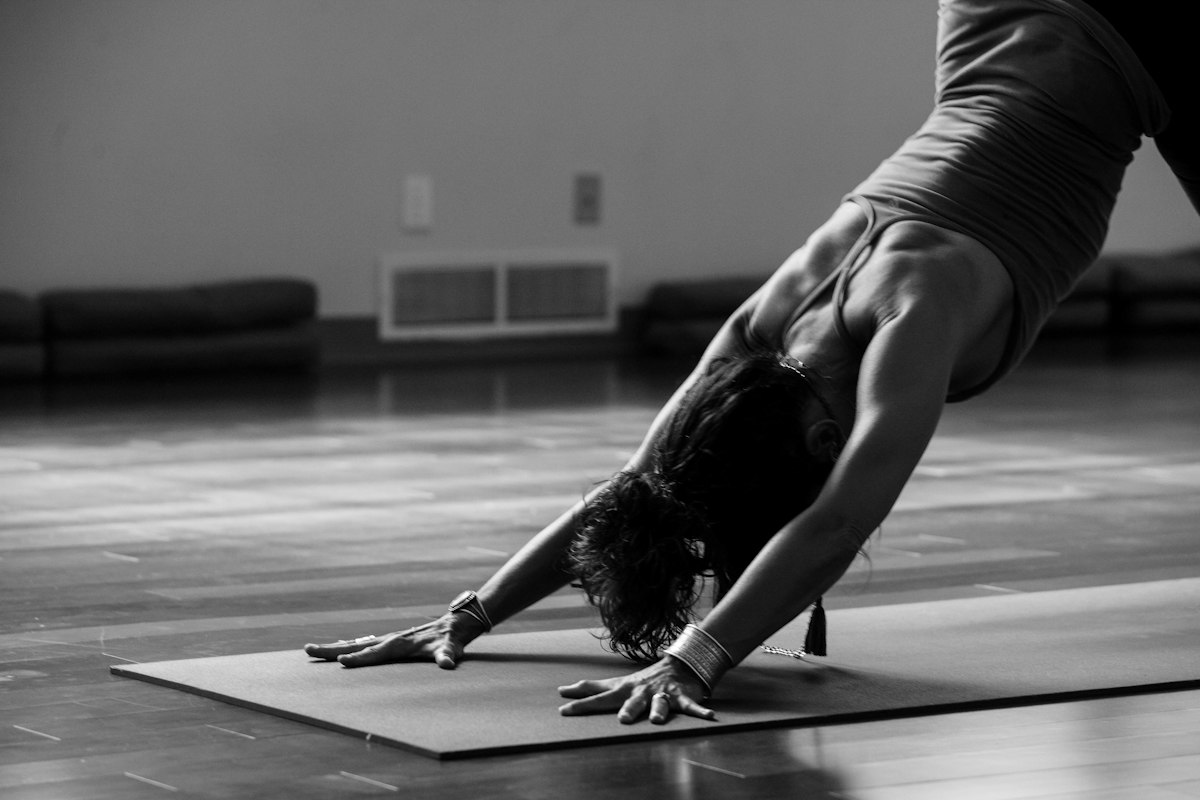
Most yoga-related spinal strain comes from forcing range of motion the body is not yet prepared for — pushing into a deep backbend before the surrounding muscles have warmed and the spine has been adequately prepared through earlier sequence elements, or repeatedly rounding the lower back in forward folds rather than hinging from the hips. Understanding this is precisely why sequencing — the order and progression of postures within a class — matters as much as the individual poses themselves.
Why Teachers Need This Knowledge
A teacher who understands basic spinal mechanics can adapt instruction for students with different spinal conditions, sequence classes that build safely toward more demanding postures, and give cues that actually protect rather than just describe a shape. This is why applied anatomy — not abstract textbook anatomy disconnected from movement — forms a dedicated part of our 200-hour curriculum.