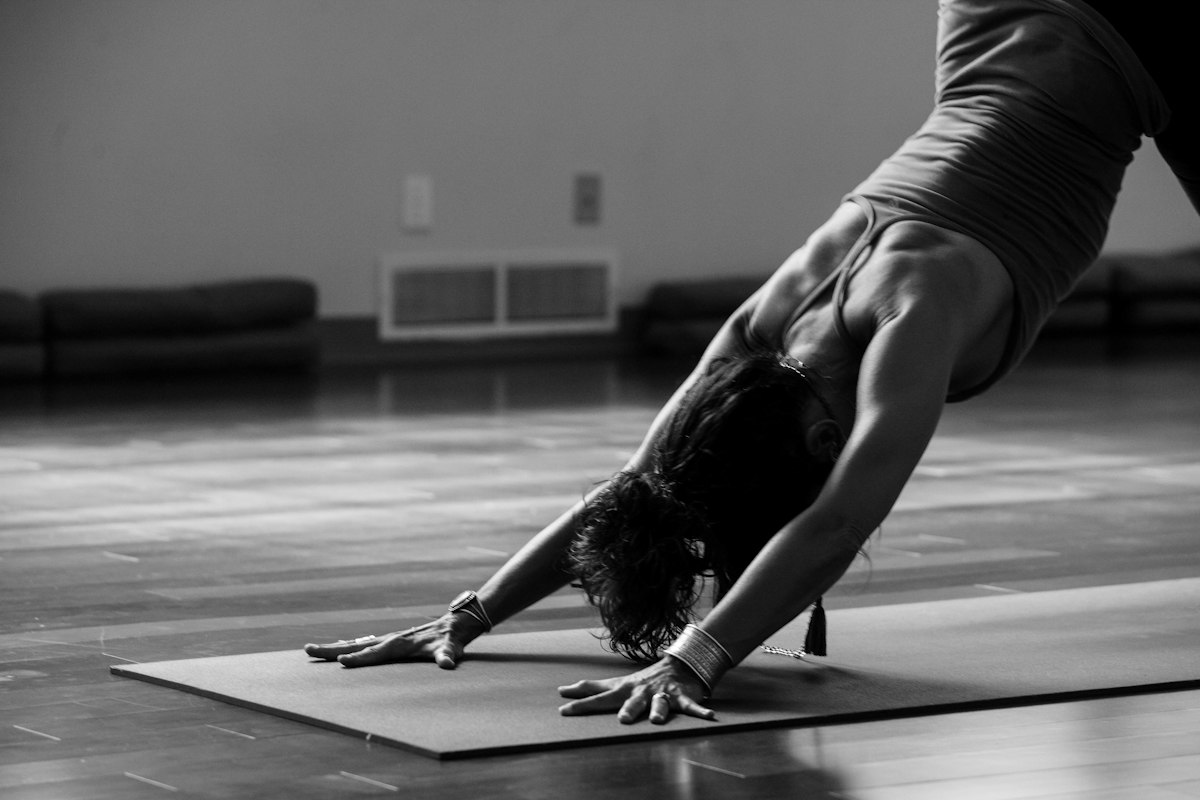
Much standard yoga instruction, including some imagery and cueing language, implicitly assumes a fairly narrow default body type — taller, leaner, with proportionally average limb length. Teaching real, diverse classes requires actively developing the skill of thoughtful modification for genuinely different bodies.
Why Limb Length and Proportion Genuinely Matter
Students with proportionally longer legs relative to their torso experience certain poses (like forward folds) quite differently than those with proportionally shorter legs — a cue assuming one proportion ("bring your forehead to your shins") may be genuinely unachievable or inappropriate for a different body proportion, regardless of flexibility or effort.
Modifying for Larger Bodies
Poses involving folding the torso over the legs, or bringing limbs close together, sometimes require genuine spatial accommodation for larger-bodied students — wider stances in certain poses, props creating necessary space, and avoiding cues that assume unlimited torso compression are all genuinely necessary modifications, not lesser versions of "real" poses.
Modifying for Limited Joint Mobility
Whether from age, prior injury, or natural variation, limited joint mobility — particularly in hips, shoulders, or spine — requires modifications that achieve the pose's underlying intention (the specific muscle engagement or stretch target) through an accessible range of motion, rather than insisting on a specific visual shape regardless of individual joint capacity.
Modifying for Pregnancy
As covered extensively in our pregnancy-specific guide, pregnant students require modifications addressing both the growing belly's spatial demands and the physiological changes pregnancy produces — a genuinely distinct modification category from general body-type variation.
Using Props Generously and Without Stigma
Presenting props (blocks, straps, bolsters) as standard tools for adapting poses to individual bodies — rather than as remedial equipment for students who "can't do the real pose" — shifts the framing toward genuine inclusivity rather than implicit hierarchy between modified and unmodified versions.
Avoiding Assumptions Based on Visual Appearance
Flexibility, strength, and joint mobility do not correlate reliably with visible body type — assuming a larger-bodied student necessarily needs more modification, or a leaner student necessarily needs less, risks both unhelpful over-modification and inappropriate under-modification based on visual assumption rather than actual individual capacity.
Asking Directly Rather Than Assuming
When uncertain about an individual student's specific needs or limitations, asking directly and privately — rather than guessing based on visual assessment — respects both the student's autonomy and your own teaching accuracy, producing better outcomes than assumption-based modification.
Building Genuine Inclusivity Into Teaching Practice
Developing comfort and skill with thoughtful, varied modification for the genuine diversity present in any real class represents an essential, ongoing teaching competency — covered as part of the broader teaching methodology training in our 200-hour program.